Vehicles of Mauritius
Browse vehicle photos from Mauritius, including cars, buses, scooters, lorries, tractors, taxis, cane trucks, rental cars, Metro Express trains, road scenes, public transport and everyday island traffic captured by Explora photographers.
Read more about vehicles in Mauritius
About Vehicles in Mauritius
Vehicles are part of the everyday visual rhythm of Mauritius. Cars waiting at roundabouts, buses crossing villages, scooters slipping through traffic, cane trucks during harvest season, taxis near hotels, pickup trucks on rural roads, delivery vans in town, quads in nature parks, and rental cars full of visitors trying to remember which side of the road to use. It is all part of the island.
For photography, vehicles are useful because they add life and scale to a scene. A coastal road is beautiful, but a bus, scooter, bicycle, tractor or truck can make it feel real. Vehicles show how people move between beaches, towns, schools, markets, farms, offices, hotels and villages every day.
Vehicles and Daily Life in Mauritius
Mauritius has a dense road network and a high number of vehicles for a small island. Cars, buses, motorcycles, vans, lorries, pickups, tractors and taxis all share roads that pass through cities, villages, sugarcane fields, coastal areas and mountain routes.
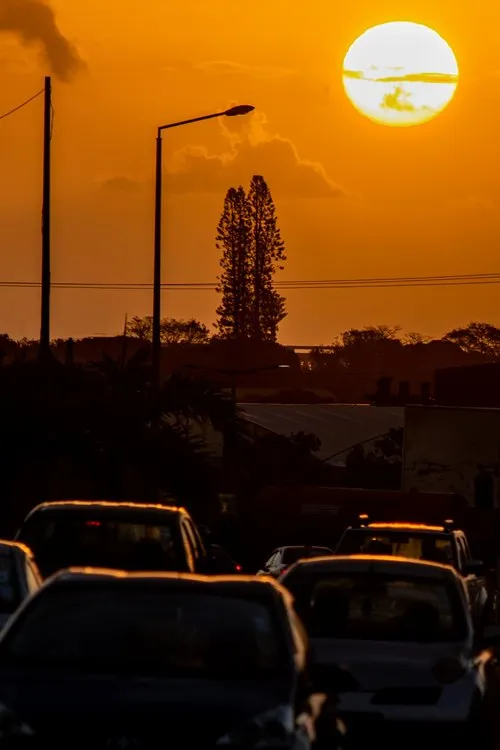
This means traffic is part of the Mauritian experience, especially around Port Louis, Ebène, Rose Hill, Quatre Bornes, Curepipe, Vacoas, Grand Bay and other busy areas. But outside peak hours and away from the main towns, vehicles also become part of quieter scenes: a lone bus on a rural road, a scooter near a beach, a pickup beside cane fields, or a taxi waiting under a tree.
Cars and Private Vehicles
Cars, double-cab pickups and dual-purpose vehicles form a major part of road traffic in Mauritius. They are used for commuting, family life, school runs, shopping, beach trips, work and weekend outings.
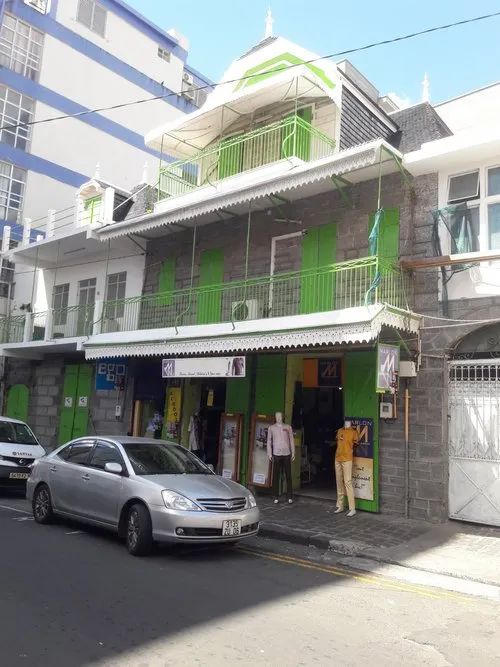
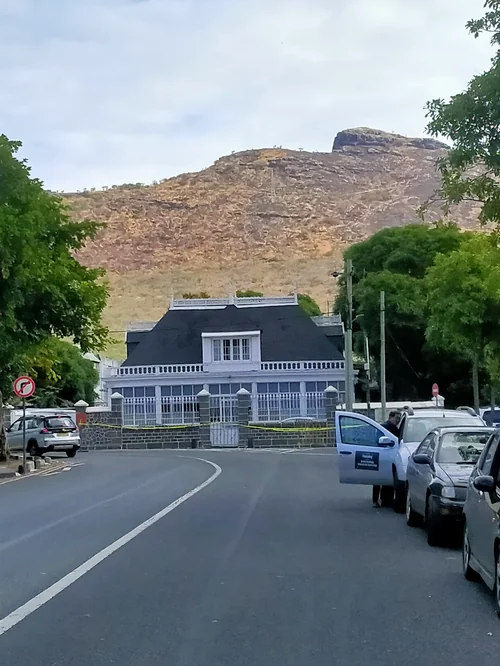
Visitors will notice many compact cars, Japanese imports, SUVs, pickups, hybrid cars and small family vehicles on the roads. In residential areas and coastal villages, parked cars often shape the street scene as much as the buildings themselves. Mauritius is small, but people move a lot.
High Price of Vehicles in Mauritius
Vehicles in Mauritius are often expensive compared with many larger countries. One reason is that almost all vehicles have to be imported. Mauritius is a small island in the middle of the Indian Ocean, so shipping costs, insurance, port handling, dealer costs and the limited market size all influence final prices.
Taxes also play a major role. Imported vehicles may be subject to import duties, excise duty, VAT and other related costs depending on the vehicle type, engine size, emissions category and current regulations. This can make the final price of a new or imported vehicle much higher than the original overseas price.
This is one reason many buyers choose smaller cars, hybrid vehicles, motorcycles or reconditioned cars. The real cost of owning a vehicle in Mauritius is not only the purchase price either. Insurance, fuel, maintenance, tyres, parking and traffic all add to the cost over time.
Reconditioned Cars in Mauritius
Reconditioned cars are common in Mauritius, especially second-hand vehicles imported from Japan. Many Mauritians choose them because they can be more affordable than brand-new vehicles while still offering modern features, good reliability and a wide choice of models.
Japanese reconditioned cars, compact hatchbacks, hybrids, SUVs and family cars are now part of the local vehicle market. This also explains why the roads of Mauritius show such a mix of vehicles: new cars, older cars, imported second-hand cars, luxury models, small city cars and practical family vehicles all sharing the same roads.
Buses in Mauritius
Buses are one of the most important forms of public transport in Mauritius. They connect towns, villages, coastal areas, schools, markets and major bus stations. For many Mauritians, the bus is still part of daily life: going to work, school, town, the market or the beach.
Bus routes are especially visible in busy places such as Port Louis, Rose Hill, Curepipe, Quatre Bornes, Flacq, Mahebourg and rural village roads. Buses are affordable and widely used, although they can be crowded during peak hours.
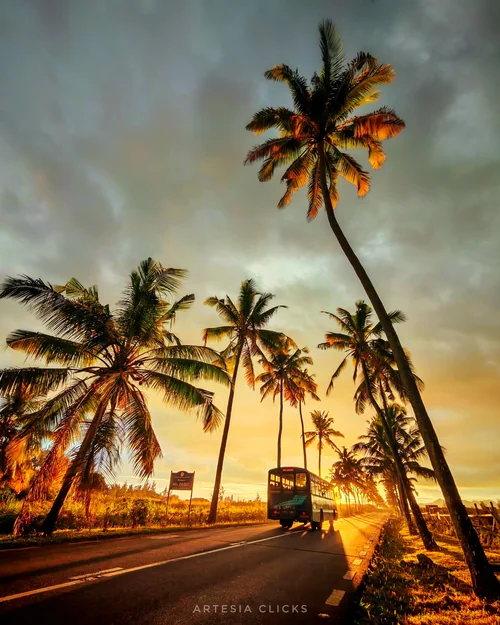
For photographers, buses are excellent subjects because they add colour, movement and local character. A bus stopping in a village, climbing a mountain road, passing through sugarcane fields or waiting at a busy terminal can say a lot about everyday Mauritius.
Old Buses, New Buses and Electric Buses
The bus scene in Mauritius has been changing. Older buses still form part of the island’s familiar road image, but newer buses with digital displays, improved comfort and cleaner technology are becoming more visible.
Electric buses are also part of the country’s move towards cleaner public transport. This gives vehicle photography a modern angle: Mauritius is not only old village buses and cane trucks. It is also slowly moving towards more sustainable mobility.
Metro Express and Trams in Mauritius
The Metro Express is the modern light rail system of Mauritius. Many people casually refer to it as the tram, although its official name is Metro Express. It connects several busy urban areas, including Port Louis, Rose Hill, Quatre Bornes, Vacoas and Curepipe.
Since its introduction, the Metro Express has changed the way many people move between the capital and the central towns. It offers an alternative to cars and buses on one of the busiest urban corridors of the island.
For photography, the Metro Express adds a modern transport angle to Mauritius: stations, rail vehicles, commuters, bridges, city lines and urban movement. It contrasts nicely with older forms of transport such as buses, taxis, scooters and sugarcane lorries.
Motorcycles and Scooters
Motorcycles and scooters are very common in Mauritius. They are practical in traffic, easier to park than cars, and useful for short trips between villages, beaches, shops and workplaces.
In coastal areas, scooters can be a simple way for visitors and locals to move around, especially near beach villages. But they also require caution. Traffic, roundabouts, sudden stops, wet roads, narrow village streets and drivers who change their mind quickly can all create risks.
For photography, scooters and motorbikes often bring energy to street scenes. A rider passing a wall, a scooter parked beside a snack shop, or a motorcycle on a coastal road can turn an ordinary image into something more lively.
Taxis and Tourist Transfers
Taxis, hotel transfers and private drivers are very common in tourist areas. Visitors often use them to travel between the airport, hotels, beaches, activities, shopping centres and sightseeing spots.
Taxis are especially visible near hotels, public beaches, airport areas, Port Louis, Grand Bay, Flic en Flac, Mahebourg, Belle Mare and Le Morne. For many visitors, the taxi driver is also the first unofficial guide to Mauritius. Sometimes with useful advice. Sometimes with strong opinions too.
Taxi Prices in Mauritius
Taxi prices in Mauritius can feel high, especially for visitors staying in hotels or tourist areas. A private taxi is convenient, but the cost can rise quickly for airport transfers, full-day sightseeing tours, waiting time or longer drives across the island.
Prices may vary depending on distance, hotel location, time of day, vehicle type, waiting time and whether the journey is a simple transfer or a private tour. It is usually better to confirm the fare before starting the journey, especially if the taxi is not operating with a visible meter or a fixed published rate.
For visitors planning several excursions, it may be worth comparing taxi prices with rental cars, private drivers, hotel transfers, buses or the Metro Express where available. Taxis can be very useful, but convenience often comes at a price.
Rental Cars in Mauritius
Rental cars are popular with visitors who want to explore Mauritius independently. They make it easier to visit beaches, waterfalls, mountains, villages, nature parks and hidden viewpoints at your own pace.
Driving in Mauritius can be rewarding, but visitors should remember that the island drives on the left. Roads can be narrow in villages, traffic can be heavy near cities, and parking can be difficult at popular beaches during weekends and public holidays.
Rental cars also appear often in travel photos, even unintentionally. A small car parked near a viewpoint, a dusty vehicle on a rural road or a line of cars beside a public beach can show the real visitor experience better than a completely empty landscape.
Parking Issues in Port Louis and Ebène
Parking can be difficult in some of the busiest business areas of Mauritius, especially Port Louis and Ebène. These places attract office workers, students, shoppers, visitors and service vehicles every day, which creates strong demand for parking spaces.
In Port Louis, the challenge is linked to the density of the capital, old streets, markets, offices, government buildings and harbour activity. In Ebène, the issue is more connected with business parks, office buildings, peak-hour traffic and the concentration of modern workplaces.
For visitors, this means it is often better to plan ahead when driving into Port Louis or Ebène. Use proper parking areas, avoid stopping illegally, and allow extra time during peak hours. For photographers, these parking and traffic scenes also show a real side of urban Mauritius: busy, practical, sometimes frustrating, but very much part of daily life.
Lorries, Trucks and Delivery Vehicles
Lorries and trucks are essential to the economy of Mauritius. They move goods from the port, deliver products to shops, carry construction materials, support agriculture and keep businesses supplied across the island.
In towns, delivery vans and trucks are part of the morning rhythm. In rural areas, lorries may carry agricultural products, building materials or equipment. Around industrial zones and Port Louis harbour, heavier vehicles are part of the working landscape.
Tractors, Lorries and Sugarcane Transport
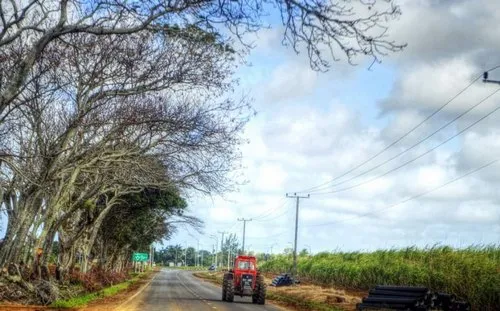
Tractors and lorries are strongly linked with the agricultural landscape of Mauritius, especially during sugarcane harvest season. In rural areas, visitors may see tractors pulling trailers loaded with cane, lorries moving between fields and factories, and agricultural vehicles using smaller estate roads.
These vehicles are part of the island’s sugarcane identity. A tractor in a field, a cane lorry on a rural road or a trailer passing near an old chimney can show a very Mauritian scene, far from the beach image of the island.
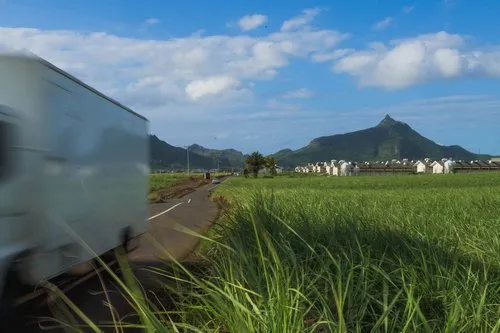
For photographers, sugarcane transport is especially interesting when framed with sugarcane fields, mountain backdrops, dust, old estate roads or late afternoon light. Drivers should also be careful around these vehicles, as they can be slow, wide and heavy, especially on narrow rural roads.
Sugarcane Trucks and Agricultural Vehicles
During harvest season, sugarcane trucks, tractors and trailers become a familiar sight in rural Mauritius. They move between fields, estate roads, weighing stations and factories, creating one of the most recognisable agricultural scenes on the island.
These vehicles connect directly with sugarcane fields, old estate roads and the history of Mauritius as a sugar-producing island. A cane truck on a rural road is not just transport. It is part of the island’s agricultural identity.
For photographers, cane trucks and tractors work especially well when framed with fields, mountains, dust, workers, old chimneys or late afternoon light.
Pickup Trucks and Utility Vehicles
Pickups and utility vehicles are common in Mauritius, especially for businesses, farms, construction, hotels, delivery services and outdoor activities. They are practical vehicles for an island where roads can shift quickly from motorway to village lane to dirt track.
In photography, pickups often appear in rural and working scenes: parked near a field, loaded with tools, waiting beside a construction site, or driving through a village road. They are not glamorous, but they are useful. And useful things often tell good stories.
Quads and Activity Vehicles
Quads are not everyday road vehicles in Mauritius, but they are popular for leisure and outdoor activities. Visitors may find quad biking in nature parks, private estates, adventure parks and off-road activity areas.
These vehicles are used to explore tracks, fields, forest edges, hills and scenic estate landscapes under supervision. Quad biking is especially popular with visitors looking for outdoor adventure beyond beaches and lagoons.
For photography, quads can add action to nature and activity scenes: dust, tracks, helmets, green landscapes, mountain views and groups riding through open terrain. Safety matters, of course. Helmets, guides and respect for the terrain are not optional details.
Emergency and Service Vehicles
Ambulances, fire engines, police vehicles, road service trucks and municipal vehicles also form part of the vehicle landscape in Mauritius. They are not always photographed, but they are important in understanding how the island functions.
In towns and cities, service vehicles may appear near roadworks, drainage works, markets, public events, beaches and accident scenes. For photographers, these vehicles can document public life, infrastructure and everyday organisation.
Vehicles Around Beaches and Hotels
Tourist areas have their own vehicle scenes: airport transfers, rental cars, hotel shuttles, taxis, scooters, tour buses, delivery vans, golf carts, beach service vehicles and boats being towed near coastal roads.
Places near beaches and hotels often show how transport supports tourism. A taxi waiting at a resort entrance, a tour bus near a viewpoint, or cars parked under casuarina trees at a public beach are all part of the visitor experience.
Vehicles in Villages and Towns
Vehicles are deeply connected with villages and towns in Mauritius. In a small village, the road is often where much of life happens: buses stop, scooters pass, vans deliver bread, cars park outside shops, children walk to school and people cross the street with perfect confidence.
In towns, vehicles show the busier side of the island: traffic queues, taxi stands, bus terminals, delivery trucks, office commuters, market shoppers and pedestrians weaving between everything. It can look chaotic, but it has its own rhythm.
Vehicles and Roads
Vehicles and roads in Mauritius belong together as photo subjects. A road without vehicles can look scenic. A road with the right vehicle can tell a story.
A bus on a mountain road, a cane truck in Bel Ombre, a taxi in Port Louis, a scooter in Grand Bay, a pickup in Chamarel, a quad in a nature park or a rental car near Le Morne all help place the viewer inside the scene. The vehicle becomes scale, movement and context.
Port Louis Traffic and City Vehicles
Port Louis is the best place to photograph the busy vehicle life of Mauritius. Buses, taxis, delivery vans, office cars, motorcycles, harbour trucks and pedestrians all share the same dense city environment.
The capital is especially interesting because vehicles sit between old buildings, markets, office towers, harbour areas and colonial streets. A bus turning near the market or a taxi waiting under old façades can feel more Mauritian than a perfectly empty postcard image.
Vehicle Photography in Mauritius
Vehicle photography works best when the vehicle belongs naturally to the scene. A bus in a village, a scooter near a beach, a lorry at the port, a cane truck in a field, a taxi outside a hotel, a quad on an estate track, or a pickup on a mountain road all carry meaning.
Look for context. The vehicle alone may be ordinary, but the vehicle in the right place can become a strong photo. Road signs, reflections, dust, rain, headlights, shadows, people boarding a bus, or a line of cars near a beach can all add atmosphere.
Drone and Aerial Vehicle Photos
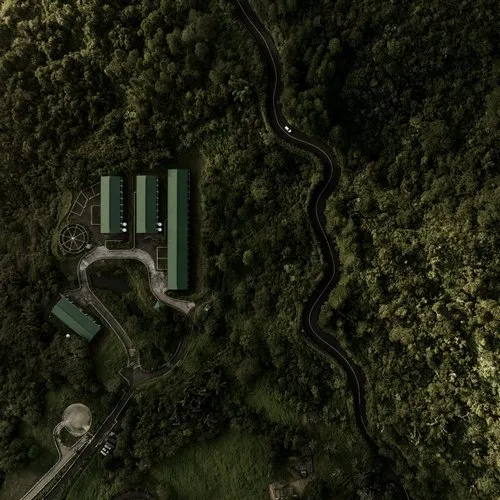
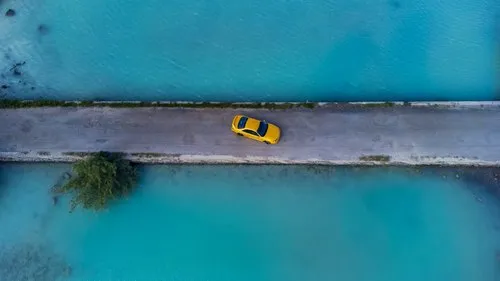
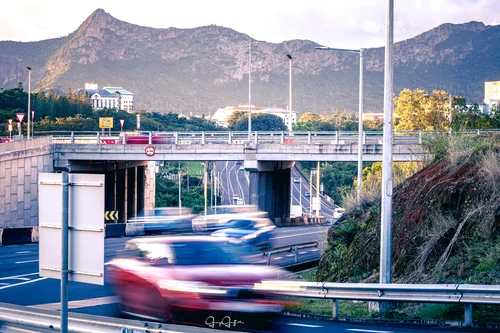
Drone and aerial photography can make vehicles look especially interesting. From above, cars and buses become small moving points in a larger landscape: roads through sugarcane fields, coastal curves, city intersections, bridges, roundabouts and highways.
Aerial photos can also show traffic patterns, parking areas, cane trucks in fields, buses at terminals, tractors on estate roads, or cars moving along scenic coastal roads. The vehicle becomes part of the island’s geometry.
Road Safety and Caution
Road safety matters in Mauritius. Traffic can be heavy, roads can be narrow, and driving habits may surprise visitors. Motorcyclists, pedestrians, buses, dogs, bicycles, parked cars and sudden stops are all part of the road environment.
Visitors renting cars or scooters should drive carefully, avoid rushing, respect speed limits, and take extra care at roundabouts and pedestrian crossings. On rural roads, watch for cane trucks, tractors, animals, cyclists and people walking close to the road edge.
Best Places to Photograph Vehicles in Mauritius
Good places to photograph vehicles in Mauritius include Port Louis for buses, taxis and city traffic; Ebène for office traffic and parking scenes; Mahebourg for village roads and waterfront movement; Flic en Flac and Grand Bay for tourist vehicles and scooters; Bel Ombre and Médine for sugarcane trucks and tractors; Chamarel and Black River Gorges for mountain-road vehicles; Grand Gaube and coastal villages for pickups, scooters and quiet roads; and nature parks or private estates for quad activity scenes.
The best vehicle photos usually happen when you wait rather than chase. Choose the background first, then let the right vehicle enter the frame. Much less stressful. Usually.
Visiting Tips
If you plan to photograph vehicles, stay safe and avoid standing in traffic, on blind corners, on roundabouts or in the middle of narrow village roads. Use pavements, safe verges, viewpoints or pedestrian areas where possible.
If people are clearly visible inside or beside vehicles, especially drivers, passengers or workers, be respectful. A bus, truck, taxi, tractor or delivery van is often someone’s workplace. A good photo should not interrupt someone’s day.
Vehicles may not be the first thing visitors think about when they imagine Mauritius, but they are part of the island’s real story. They show movement, work, tourism, agriculture, city life, transport costs, parking pressure and everyday journeys. In other words, Mauritius in motion.
Vehicle Photos from Mauritius
Explore photos of vehicles in Mauritius, from cars, buses, scooters, taxis and Metro Express trains to lorries, tractors, sugarcane trucks, quads, rental cars, road scenes, public transport, city traffic and everyday island movement.