Architecture in Mauritius
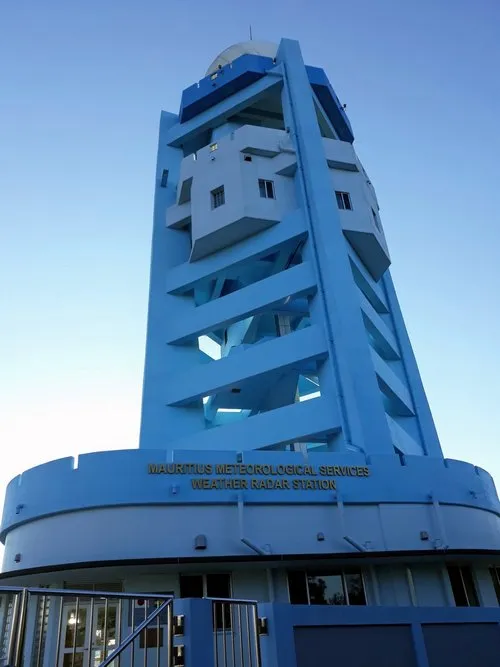
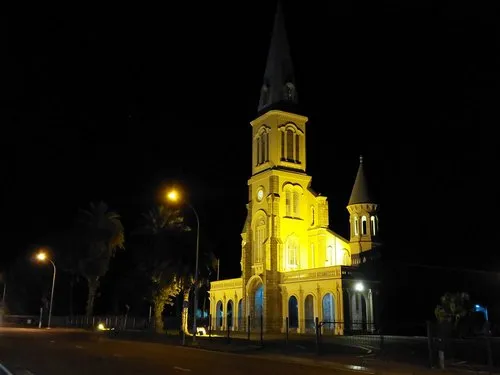
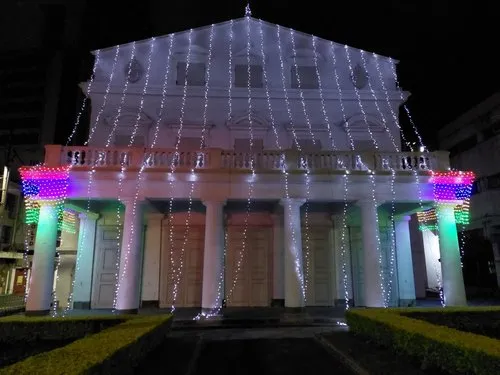
Browse architecture photos from Mauritius, including colonial buildings, Creole houses, colourful homes, old shops, abandoned structures, churches, Caudan Waterfront, modern buildings, Ebène Cybercity and everyday urban details captured by Explora photographers.
Read more about architecture in Mauritius
About Architecture in Mauritius
Architecture in Mauritius is not one single style. It is a mix of colonial buildings, Creole houses, religious architecture, old shops, concrete family homes, colourful villages, waterfront developments, modern offices, hotels and abandoned structures slowly being taken back by time.
What do you notice first when you walk through a Mauritian town? The old wooden shutters? The bright colours on a house? The corrugated metal roof? The church tower? The concrete columns waiting for a future extension? Or the glass buildings of Ebène Cybercity rising above the central plateau?
This page focuses on architecture as seen through photography: buildings, homes, façades, streets, old structures, modern cityscapes, heritage places and the small details that make the built landscape of Mauritius feel human.
A Short History of Architecture in Mauritius
The architecture of Mauritius reflects the island’s history. French colonial influence, British administration, slavery, indentured labour, sugar estates, port activity, religious diversity, modern business development and everyday family life have all left visible marks on the island’s buildings.
In older towns such as Port Louis, Mahebourg, Curepipe and Rose Hill, architecture often tells stories that are not written on signs. A balcony, a warehouse, a shopfront, a stone wall or a narrow street can reveal how people lived, worked, traded and adapted to the tropical climate.
Mauritian architecture is also practical. It responds to heat, rain, cyclones, limited land, family growth, budget, status, religion and daily routines. A building here is rarely just a design object. It is often a solution to life.
Colonial Architecture in Mauritius
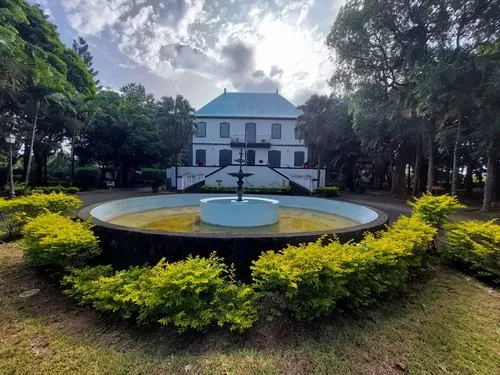
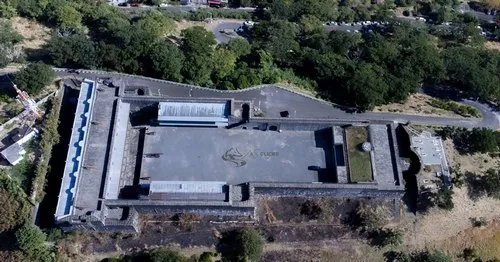
Colonial architecture is one of the most visible historical layers of Mauritius. It includes old government buildings, estate houses, plantation structures, warehouses, stone walls, verandas, timber houses and large residences built for wealthy families or estate owners.
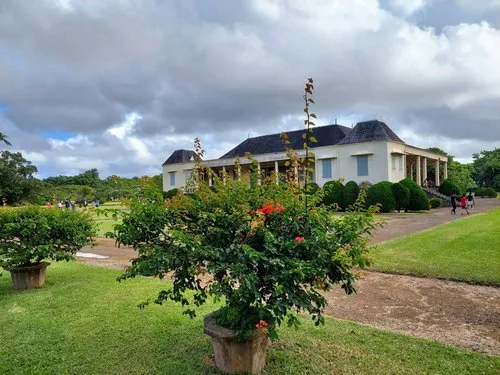
Many colonial and Creole-style homes were designed for the tropical climate. Wide verandas, high ceilings, wooden shutters, sloping roofs and raised structures helped with shade, ventilation and rain protection.
Some of the best-known examples of preserved colonial and Creole architecture include Eureka House in Moka and Château de Labourdonnais in Mapou. These places show a more refined side of old Mauritian architecture, with gardens, verandas, timber work and estate settings.
Creole Houses
Creole houses are among the most charming forms of traditional architecture in Mauritius. They often include timber construction, decorative details, verandas, pitched roofs and shutters designed for airflow and shade.
What makes them beautiful is not only the design, but the feeling. A Creole house often seems to belong to its garden, its path, its shade and its slower rhythm of life.
Estate Houses and Sugar Heritage
Estate houses and plantation buildings are connected with the history of sugarcane in Mauritius. Old chimneys, stone walls, mills, warehouses and estate residences remind us that architecture was also linked to agriculture, labour and economic power.
Some structures have been restored, while others are abandoned or only partly visible. For photographers, these places can be powerful because they show beauty and history at the same time.
British Colonial and Port Architecture
During the British period, Mauritius developed administrative buildings, port structures, warehouses, roads, bridges, public institutions and buildings linked with trade and immigration.
Aapravasi Ghat in Port Louis is one of the most important heritage sites in Mauritius. It is linked with the arrival of indentured labourers and forms part of the island’s wider history of migration, labour and identity.
In Port Louis, the old port area, stone structures, warehouses, government buildings and commercial streets still show how the city developed around trade, administration and the harbour.
Port Louis Architecture
Port Louis is one of the richest places for architecture photography in Mauritius. The city mixes old government buildings, shops, religious sites, colonial façades, market structures, office towers, arcades, narrow streets and modern commercial buildings.
The beauty of Port Louis is often in contrast. A small old shop may stand beside a modern office. A weathered wall may sit behind a polished sign. A colonial building may share the street with traffic, street vendors and glass façades.
For photography, Port Louis rewards people who walk slowly. Look at doors, balconies, tiled signs, old windows, metal grilles, shopfronts, staircases, walls, shadows and the way people move around buildings.
Caudan Waterfront
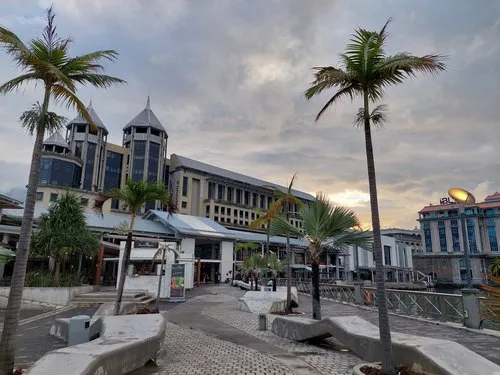
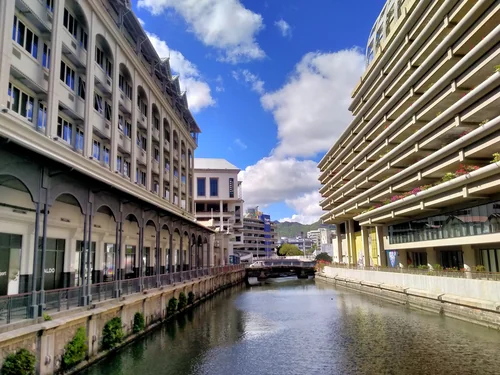
Caudan Waterfront is one of the most recognisable modern redevelopment areas in Port Louis. It combines shopping, offices, restaurants, cultural spaces, harbour views and restored waterfront character.
Caudan is interesting because it does not feel like a traditional Mauritian village or an old colonial street. It represents a different kind of architecture: waterfront redevelopment, leisure space, business space and urban tourism.
For photographers, Caudan offers colourful umbrellas, harbour reflections, façades, walkways, public art, shopfronts, cafés, people, boats and evening lights. It is especially useful for showing the modern and commercial side of the capital.
Churches and Religious Architecture
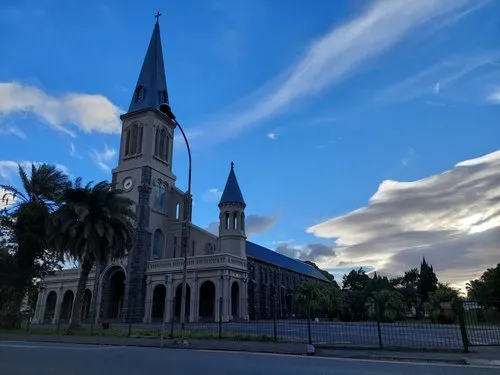
Religious architecture is a major part of the Mauritian built landscape. Churches, temples, mosques, pagodas and shrines reflect the island’s cultural diversity and the daily spiritual life of Mauritian people.
This page mentions churches only briefly because they have their own dedicated page: churches of Mauritius.
For architecture photography, religious buildings are important because they combine structure, symbolism, colour, public space and community memory. A church tower, temple entrance, mosque façade or small roadside shrine can say a lot about the area around it.
Traditional Houses in Mauritius
Traditional Mauritian houses are often modest, practical and full of personality. Some are made of timber, some of concrete, some with corrugated metal sheets, and many have been extended or modified over time.
The older houses are especially interesting. You may see metal sheet roofs, wooden walls, small verandas, painted shutters, concrete steps, narrow paths, fences, plants at the entrance and bright colours chosen with real confidence.
Do the colours always match? Not necessarily. Does that make them less interesting? Absolutely not. Mauritian houses often have their own personality, and sometimes the colour choice is exactly what makes the photo memorable.
Old Houses with Corrugated Metal Sheets
Old houses built with corrugated metal sheets are part of the visual memory of Mauritius. Some were simple homes, shops or small rural buildings. Others still stand in villages, towns and old neighbourhoods, sometimes patched, repainted or slowly fading.
These buildings are important because they show everyday architecture, not only prestigious architecture. They speak of limited budgets, adaptation, weather, repairs, family life and the practical side of building in Mauritius.
For photography, corrugated metal houses can be very strong subjects: rust, paint, shadows, roof lines, old doors, patched walls and plants growing around them all add texture.
Colourful Mauritian Homes
Many Mauritian homes are painted in bright colours: blue, green, pink, yellow, orange, turquoise, purple or combinations that would make a minimalist designer nervous.
These colours are part of the charm of local streets and villages. They make houses feel personal and alive. A colourful wall, a painted gate, a line of laundry, a few potted plants and a bicycle outside can tell a complete neighbourhood story.
Modern Family Houses
Modern Mauritian family houses are often built in concrete, sometimes over several stages as the family grows or finances allow. Many homes are designed with flat roofs, balconies, gates, tiled terraces and space for future extensions.
This creates a very Mauritian architectural reality: homes are not always finished once and for all. They evolve. A house may show one generation’s work, then another floor, then a new balcony, then a painted wall, then a garden.
Old Shops and Commercial Buildings
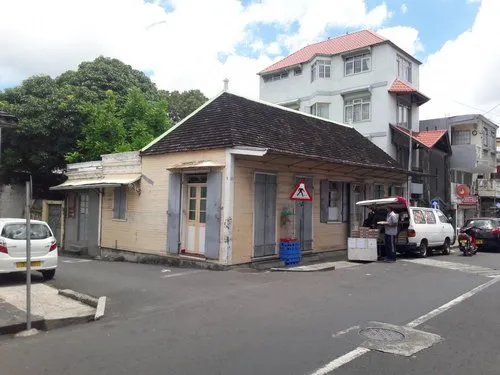
Old shops are among the most interesting architecture subjects in Mauritius. They can be found in Port Louis, Mahebourg, Curepipe, Rose Hill, Beau Bassin, Quatre Bornes, village centres and older coastal towns.
Many old shops have metal shutters, hand-painted signs, narrow façades, wooden counters, tiled floors, small display windows and upper floors used for storage or housing.
These buildings are important because they show how commerce once worked at street level. They are not always grand, but they are rich in detail. A faded shop sign can sometimes say more about a town than a new glass building.
Abandoned Old Buildings
Abandoned buildings in Mauritius can be visually powerful. They include old houses, shops, factories, estate buildings, cinemas, warehouses, schools, storage structures and broken walls left behind by changing times.
Why are abandoned buildings so interesting to photograph? Maybe because they show time more clearly than new buildings. Peeling paint, broken windows, plants growing through cracks, old tiles and rusted metal all create a feeling of memory.
However, abandoned buildings can also be unsafe. Floors may collapse, roofs may be unstable, and private property should be respected. A good photo is never worth entering a dangerous place illegally.
Ebène Cybercity and Modern Architecture
Ebène Cybercity represents the modern business side of Mauritius. It was developed as a technology and office hub, with modern towers, glass façades, corporate buildings, parking areas, wide roads and a very different urban atmosphere from old Port Louis.
For many Mauritians, Ebène is associated with office work, technology, banks, call centres, traffic, lunch breaks and the rhythm of the modern service economy.
Architecturally, Ebène is useful because it shows the shift from colonial and commercial port architecture to a more corporate, planned and vertical business landscape. It may not have the romance of an old Creole house, but it tells an important part of today’s Mauritius.
Modern Buildings and Urban Development
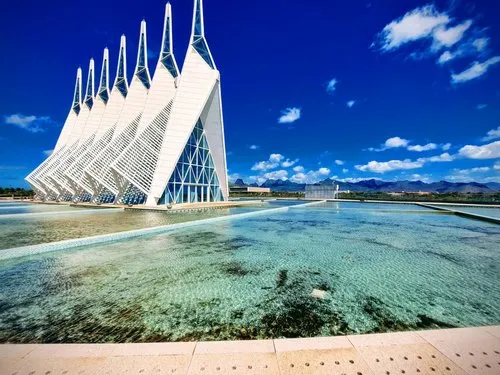
Modern architecture in Mauritius includes office towers, malls, apartment blocks, hotels, gated residences, hospitals, universities, business parks, shopping centres and mixed-use developments.
Concrete, glass, aluminium, tiles and steel are common materials. Many modern buildings aim for comfort, security, parking, air-conditioning and efficient land use. This is very different from the shaded veranda and timber shutter logic of older tropical houses.
Modern buildings can sometimes feel less personal than old houses, but they are part of the real island too. Mauritius is not frozen in a postcard. It changes, builds, extends, demolishes, renovates and starts again.
Hotel and Coastal Architecture
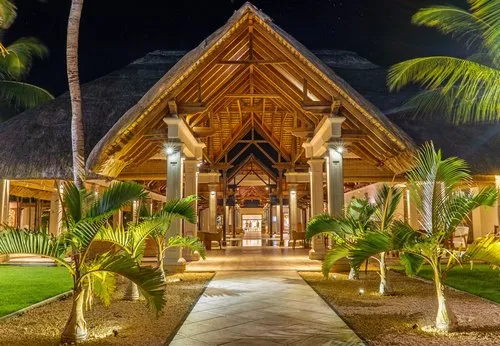
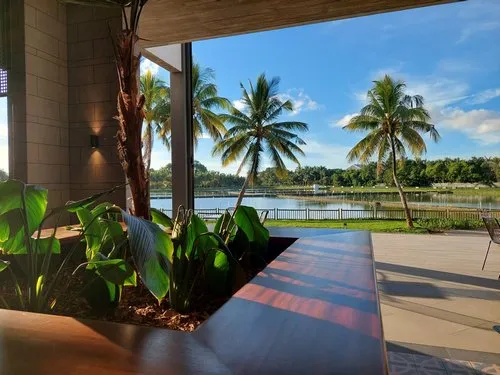
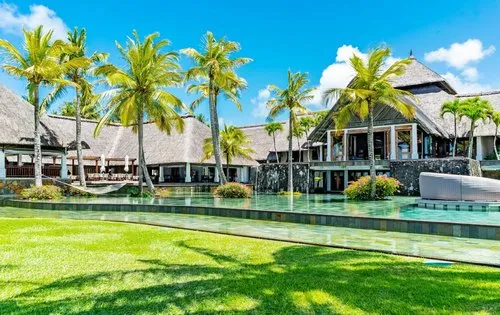
Hotels in Mauritius have their own architectural language. Many combine tropical gardens, open-air lobbies, thatched or pitched roofs, beach pavilions, pools, stone walls, timber decks and sea-facing rooms.
Some hotels use a Creole-inspired style, while others are more modern, minimal or luxury-resort oriented. Coastal architecture often tries to create a smooth transition between building, garden, beach and lagoon.
For photographers, hotels can be interesting when the architecture interacts with landscape: arches framing the sea, palm shadows on walls, reflections in pools, wooden walkways, beach restaurants and sunset terraces.
Materials Used in Mauritian Architecture
Mauritian buildings use many materials, depending on period, budget and location. Older buildings may include timber, basalt stone, lime, ironwork, corrugated metal sheets and wooden shutters. Modern buildings often use concrete, glass, aluminium, tiles, steel and synthetic roofing materials.
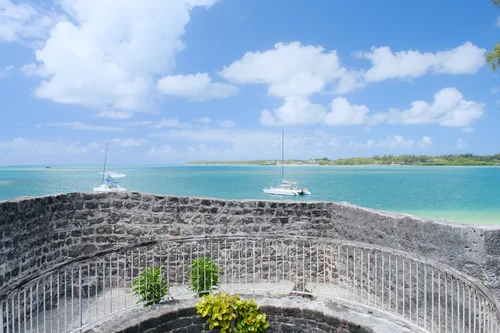
Basalt stone is especially connected with the volcanic character of Mauritius. It appears in old walls, boundary structures, drains, heritage buildings and some modern decorative finishes.
Corrugated metal is also important visually. It may be humble, but it is part of the real architectural language of villages, old shops, workshops, temporary structures and older homes.
Architecture in Villages and Towns
Architecture in Mauritian villages and towns is often more revealing than famous buildings. You see how people actually live: gates, verandas, concrete columns, old shops, painted walls, tiled terraces, extensions, rooftop water tanks, fences, small shrines, plants, garages and courtyard spaces.
Villages and towns of Mauritius show architecture as a living process. Buildings are repaired, painted, extended and adapted over time.
This kind of architecture may not appear in glossy brochures, but it is deeply Mauritian. It is where design meets budget, climate, family, pride and habit.
Roadside Architecture
Roadside architecture in Mauritius includes bus stops, small shops, snack bars, old walls, petrol stations, religious shrines, painted houses, abandoned buildings, estate gates and commercial signs.
These places are easy to ignore when driving, but they can be very rich for photography. A road tells you how an island connects itself: between village and town, work and home, coast and mountain.
For more road-focused images, see roads in Mauritius.
Architecture, Memory and Identity
Architecture is not only about beautiful buildings. It is also about memory. An old shop may remind someone of childhood. A metal-sheet house may show a way of life that is disappearing. A church may hold family ceremonies. A waterfront may show urban renewal. An abandoned estate building may speak quietly about sugar history.
When you photograph architecture in Mauritius, you are often photographing change. Some buildings are restored, some are demolished, some are repainted, some are forgotten, and some are transformed into something completely new.
Architecture Photography in Mauritius
Architecture photography in Mauritius works best when you look beyond the obvious. Do not only photograph big buildings. Look for shutters, balconies, doors, staircases, tiled floors, old signs, metal roofs, rust, paint, symmetry, shadows, plants growing on walls and people using the space.
A building without people can be beautiful. A building with signs of life can be more meaningful.
Best Architecture Photo Subjects
Good architecture photo subjects in Mauritius include colonial houses, old shops, corrugated metal houses, churches, temples, mosques, Caudan Waterfront, Ebène Cybercity, Port Louis streets, old estate buildings, abandoned structures, colourful homes, hotel façades, balconies, shutters, doors, gates and street corners.
Best Time for Architecture Photography
Morning is good for soft light, quiet streets and clean shadows. Late afternoon is excellent for warm façades, long shadows, old walls and city atmosphere. Night is useful for Caudan, Ebène, bars, hotels and modern buildings with lights.
Cloudy weather can also be useful. It softens contrast and helps photograph old buildings without harsh shadows.
Details That Make a Photo Stronger
Look for details that show time and place: peeling paint, old hinges, coloured shutters, shop signs, iron balconies, carved wood, tiled steps, concrete patterns, roof sheets, wires, rain marks, plants and shadows.
Architecture is not always about the whole building. Sometimes one old window tells the story better.
Responsible Architecture Photography
Respect private property. Do not enter abandoned buildings without permission. Avoid photographing people’s homes in a way that feels intrusive. If someone is clearly visible in front of their house or shop, ask permission when possible.
Religious buildings should be photographed with respect. Check whether photography is allowed inside, dress appropriately and avoid disturbing ceremonies or worshippers.
In heritage sites, follow rules and do not touch fragile structures, old walls, inscriptions or protected elements.
Useful Online References
Useful sources about architecture, heritage and urban development in Mauritius include the Mauritius Now history and heritage guide, the UNESCO page about Aapravasi Ghat, the Le Caudan Waterfront official page, the Guardian article about Ebène Cybercity, the Mauritius Attractions guide to Ebène Cybercity, the World Monuments Fund page on traditional architecture in Mauritius and the National Heritage Fund Act.
Visiting Tips
If you want to photograph architecture in Mauritius, start with Port Louis, Caudan Waterfront, Mahebourg, Curepipe, Rose Hill, old village centres, churches, old shops, colonial houses and Ebène Cybercity.
Then look closer. The most interesting architecture photo may not be the largest building. It may be an old shopfront, a painted wall, a rusty roof, a balcony, a gate, or a house that someone has cared for in their own very Mauritian way.
Architecture Photos from Mauritius
Explore architecture photos from Mauritius, from colonial buildings, Creole houses, old shops and colourful homes to churches, Caudan Waterfront, Ebène Cybercity, abandoned buildings, heritage sites and modern urban landscapes.